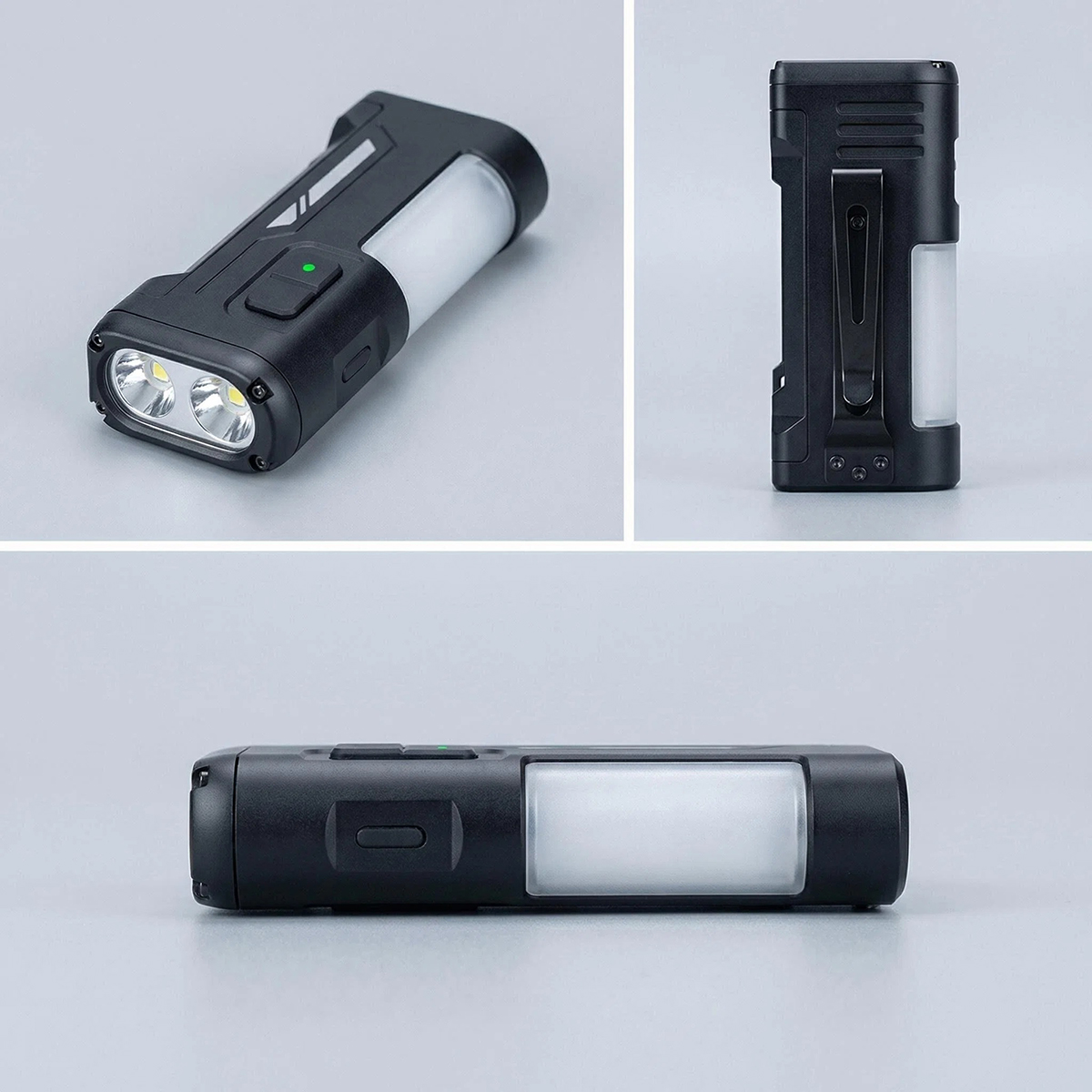

Was ist eine flache EDC-Taschenlampe?
Eine flache EDC-Taschenlampe ist eine kompakte Alltagslampe mit einem schlanken rechteckigen Körper statt eines traditionellen runden Rohrs, was es einfacher macht, sie in Taschen, Taschen, Werkzeugsets und Reiseausrüstung zu verstauen. Die flachere Karosserie reduziert das Rollen auf Tischen, Fahrzeugpaneelen und Arbeitsflächen und reduziert gleichzeitig den Taschenvolumen. Seitenlichter erweitern das Produkt von einer gerichteten Taschenlampe zu einem vielseitigeren Notfall- und Flächenbeleuchtungswerkzeug. Ein wiederaufladbarer Akku unterstützt den wiederholten täglichen Gebrauch, ohne das Produkt als Einwegprodukt zu behandeln. Y5 ist ein Beispiel für diese flache EDC-Taschenlampenrichtung, und B2B-Käufer können dieselbe Designlogik für zivile tragbare ODM-Beleuchtungsprojekte verwenden.
Warum herkömmliche Taschenlampen beim täglichen Tragen versagen können
Traditionelle runde Taschenlampen sind in vielen Anwendungen weiterhin nützlich, insbesondere wenn das Design ein starker Griff, ein größerer Reflektor oder ein vertrautes zylindrisches Batterielayout ist. Das Problem ist nicht, dass runde Taschenlampen veraltet sind. Das Problem ist, dass viele zivile EDC-Nutzer heute Telefone, Schlüssel, Karten, Werkzeuge, Ladegeräte und Reisezubehör in derselben Tasche oder Tasche tragen.
In dieser täglichen Umgebung kann ein rundes Rohr von einem Tisch, einer Fahrzeughaube oder einer Werkbank abrollen. Sie kann eine unbequeme Taschenwölbung erzeugen, sich in einen Rucksackorganizer verschieben und einschränken, wie das Licht bei einer Aufgabe am Straßenrand oder auf dem Campingplatz positioniert werden kann. Ein Einstrahl-Design kann auch Schwierigkeiten haben, wenn der Nutzer sowohl Richtungslicht als auch Sicht im nahen Bereich benötigt.
Ein weiterer häufiger Fehler ist, nur maximale Lumen zu vergleichen. Hohe Leistung kann nützlich sein, aber eine tragbare Lampe muss auch Wärme, Betriebszeit, Schaltlogik, Lowmode-Nutzbarkeit und echten Tragekomfort steuern. Für B2B-Käufer ist dies der Moment, an dem eine flache EDC-Taschenlampe zur Produktentwicklungsfrage und nicht nur zur Stilwahl wird.
Was unterscheidet eine flache EDC-Taschenlampe?
Eine flache EDC-Taschenlampe verwendet ein rechteckiges oder schlankes flaches Gehäuse, um das Tragen von Trag, Lagerung und die Nutzbarkeit des Produkts zu verbessern. Flaches Design ist nicht nur eine Designentscheidung. Sie verändert, wie das Produkt transportiert, gelagert, betrieben und positioniert wird.
Eine flache Taschenlampe kann natürlicher in einer Tasche, einem Rucksackpanel, einem Handschuhfach, einer Reisetasche oder einem Notfallset für Fahrzeuge sitzen. Die breitere Oberfläche kann auch Platz für Seitenbeleuchtung, Statuselemente oder ein differenzierteres Produkterscheinungsbild schaffen. Das macht das Format relevant für Reisezubehör, Outdoor-Ausrüstung, Werkzeugkits und zivile wiederaufladbare Taschenlampen.
Flaches Design erfordert weiterhin ingenieurtechnische Abwägungen. Ein Flachkörper muss die Wärme des Hauptlichts steuern, das Batteriesystem schützen, einen zuverlässigen Schalterbetrieb unterstützen und die strukturelle Festigkeit erhalten. Das optische Design muss ebenfalls der realen Anwendung entsprechen, da eine kompakte Taschenlampe für Camping, Reisen oder Fahrzeugnotfälle nicht allein anhand der Spitzenleistung bewertet werden sollte.
Y5-Fallstudie: Eine 2000LM wiederaufladbare, flache EDC-Taschenlampe
Y5 ist eine EDC-Taschenlampe, die als flache, wiederaufladbare EDC-Taschenlampe für zivile tragbare Beleuchtung positioniert ist. Es handelt sich nicht um ein Waffenlicht, Tauchlicht, UV-Licht oder Laserprodukt. Sein Wert liegt in der Kombination einer schlanken Karosserie, einem leistungsstarken Hauptbalken, Seitenlichtfunktionen und einer Aluminiumstruktur für echten täglichen und Außenbereich.
Der 2000LM High Mode ist nützlich für kurzzeitige helle Beleuchtung, offene Flächenkontrollen und Momente, in denen der Benutzer eine bessere Sicht benötigt. Die 500LM- und 200LM-Modelle sind praktischer für Routineaufgaben und Energiemanagement. Das ist wichtig, weil ein EDC-Produkt das tägliche Verhalten unterstützen sollte, nicht nur einen kurzen Spezifikationspeak.
Die maximale Reichweite von 160 Metern ist für den allgemeinen Außeneinsatz, Reisebeleuchtung, Fahrzeugnotfälle und mittlere Entfernungen geeignet. Sie sollte als professionelle Langwurf-Kategorie nicht übertrieben werden. Die IPX4-Wasserdichtigkeit unterstützt tägliches Spritzen und leichte Außeneinwirkung, ist aber keine Tauchberechtigung. Der Aufprallwiderstand von 1 Meter ist für das tägliche Tragen geeignet, nicht für schwere industrielle Belastungen.
Mit einer Größe von 22 mm × 40 mm × 95 mm und einem Gewicht von 127 g mit Akku entspricht der Y5 der Logik einer wiederaufladbaren EDC-Taschenlampe, die in Taschen, Rucksäcke und Fahrzeugsets passen kann. Die mattierte anti-fingerabdrückliche Textur und die eloxierte schwarze Oberfläche sorgen für ein saubereres Erscheinungsbild im täglichen Gebrauch, während das Gehäuse der 6063 Aluminium-EDC-Taschenlampe ein stärkeres Produktgefühl als Kunststoffalternativen bietet.
Warum Hauptbalken und Seitenlichter gemeinsam geplant werden sollten
Der Hauptlichter und die Seitenbeleuchtung erfüllen unterschiedliche Aufgaben. Das vordere Hauptlicht dient zur Richtungsbeleuchtung, zum Beispiel zur Überprüfung eines Weges, Fahrzeugbereichs, Campingplatzrandes oder Arbeitszone. Seitenleuchten eignen sich besser für Nahbereichsfüllung, Flächensicht oder Signalunterstützung, wo ein schmaler Frontstrahl nicht das bequemste Werkzeug ist.
Y5 integriert rote, blaue und weiße Seitenleuchten, die die Produktdifferenzierung und Notfallsichtbarkeit für zivile Anwendungsfälle wie Straßenwarnung, Rucksackbeleuchtung, Campingunterstützung und Fahrzeugnotfallsets verbessern können. Diese Nebenfunktionen sollten nicht als dekorative Merkmale behandelt werden. Sie sollten um reale Nutzerszenarien herum geplant werden.
Für B2B-Käufer ist die Frage nicht einfach, wie viele Lichtquellen ein Produkt hat. Die Seitenbeleuchtungsfunktion beeinflusst Batteriekapazität, Wärme, Schalterlogik, Modusreihenfolge, versehentliche Aktivierung und Benutzerverständnis. Eine praktische EDC-Taschenlampe mit Seitenlicht sollte den täglichen Betrieb klarer machen, nicht verwirrender.
Wo macht das Y5 Flat EDC-Design Sinn?
Y5 ist besonders relevant, wenn Nutzer eine kompakte Lampe benötigen, die zwischen Taschentransport, Reiselagerung, Campingplatznutzung, Fahrzeugnotfällen und leichter Arbeit wechselt. Sie ist nicht dazu gedacht, jede professionelle Beleuchtungskategorie zu ersetzen. Seine Stärke liegt in praktischer ziviler Vielseitigkeit.
Wie sollten Nutzer eine wiederaufladbare flache EDC-Taschenlampe auswählen?
Nutzer sollten eine wiederaufladbare flache EDC-Taschenlampe wählen, indem sie Komfort, praktische Modi, Seitenbeleuchtung, Batteriegewohnheit, Umweltschutz und Materialoberfläche gemeinsam bewerten. Ein starkes Produkt ist nicht nur ein hochproduktives Produkt; Es ist ein Produkt, das in das tatsächliche tägliche Muster des Nutzers passt.
Körperform und Taschenkomfort
Die erste Frage ist, ob die Lampe angenehm ist, sie jeden Tag zu tragen. Eine flache EDC-Taschenlampe kann das Rollen und den Taschendruck verringern, aber der endgültige Komfort hängt weiterhin von der Größe, dem Kantendesign und der Art des Trägers ab.
Hauptlichtausgang und praktische Modi
Maximale Leistung ist nützlich, wenn kurzzeitig mehr Licht benötigt wird, aber der tägliche Gebrauch hängt oft von mittleren und niedrigen Modi ab. Eine 2000-Lumen-EDC-Taschenlampe benötigt außerdem praktische niedrigere Modi für Komfort, Wärme und Batteriemanagement.
Seitenlichtfunktion und Notfallsicht
Seitenlichter können für Flächenbeleuchtung oder Warnsichtbarkeit sorgen. Käufer sollten prüfen, ob die Seitenbeleuchtungsmodi leicht verständlich sind und ob sie echte Anwendungsfälle unterstützen, anstatt die Komplexität zu erhöhen.
Batteriekapazität und tägliche Ladegewohnheiten
Der 18650 2600mAh Lithium-Akku unterstützt wiederholte Nutzung, aber Nutzer sollten dennoch überlegen, wie oft das Produkt genutzt, gelagert und aufgeladen wird. Batterieplanung beeinflusst sowohl die Bequemlichkeit als auch die Produktzufriedenheit.
Wasserdichtigkeit und Aufprallbeständigkeit
IPX4 eignet sich für Spritzer und Lichteinwirkung täglich, während eine Aufprallfestigkeit von 1 Meter für normale Tragunfälle geeignet ist. Diese Berechtigungen sollten auf den tatsächlichen Einsatz abgestimmt werden und nicht als Tauch- oder schwerer Industrieschutz überbewertet werden.
Material, Oberfläche und Griffstruktur
6063 Aluminiumlegierung, eloxierte schwarze Oberfläche und eine mattierte Anti-Fingerabdruck-Textur sorgen für ein saubereres und langlebigeres Gefühl im täglichen Gebrauch. Material und Oberflächenverarbeitung beeinflussen Griff, Erscheinungsbild und wahrgenommenen Produktwert.
Was sollten B2B-Käufer fragen, bevor sie eine flache EDC-Taschenlampe entwickeln?
B2B-Käufer sollten kein generisches Design kopieren. Ein erfolgreiches ziviles EDC-Produkt sollte mit Benutzerszenario, Einzelhandelspositionierung, Batteriewahl, optischem Design, Seitenbeleuchtungslogik, Struktur und Verpackung beginnen. HierOEM/ODM-DiensteWertvoller werden als einfache Montage.
Wer ist der Zielnutzer?
Ein Pendler, Camper, Techniker, Fahrer und Reisekunde können alle unterschiedliche Funktionen schätzen. Die Produktbeschreibung sollte den Nutzer vor der Auswahl von Ausgabe, Modi oder Verpackung definieren.
Ist das Produkt für EDC, Reisen, Camping oder Werkzeugnutzung gedacht?
Eine maßgefertigte EDC-Taschenlampe sollte nicht versuchen, jede Kategorie gleichermaßen zu bedienen. Der Hauptanwendungsfall sollte die Entscheidungen über Karosserieform, Lichtstrahl, Seitenlicht und Zubehör leiten.
Welche Strahlentfernung und Ausgabemodi sind tatsächlich nützlich?
Eine lange Schlagzeile verbessert die tägliche Benutzerfreundlichkeit möglicherweise nicht. Käufer sollten definieren, wann Nutzer hohe Ausgabe, mittlere Leistung, niedrige Leistung, Stroboskop- oder SOS-Funktionen benötigen.
Sollten Seitenleuchten weiß, farbig oder multifunktional sein?
Seitenlichter sollten einen definierten Anwendungsfall unterstützen, wie z. B. Flächenfüllung, Sichtbarkeit oder Notfallunterstützung. Die Modussequenz sollte für gewöhnliche Zivilnutzer einfach bleiben.
Welches Batterieformat passt zur Zielgruppe?
Das Batterieformat beeinflusst Größe, Betriebszeit, Austausch, Versand und Erwartungen der Nutzer. Eine wiederaufladbare EDC-Taschenlampe sollte nach echten Ladegewohnheiten gestaltet werden.
Wie sollte der flache Körper die Verpackung und Präsentation beeinflussen?
Eine flache Karosserie kann die Präsentation im Einzelhandel, die Organisation der Bausätze und das Zubehörlayout verbessern. Die Verpackung sollte den Grund für die Form kommunizieren und nicht nur das Produktfoto zeigen.
Welche Tests sind für die vorgesehene Umgebung erforderlich?
Alltagstransport, Outdoor-Reise- und Fahrzeugnotfallprodukte benötigen möglicherweise unterschiedliche Prüfungen hinsichtlich Fall, Wasserdichtigkeit, Temperaturverhalten, Schalternutzung und Batteriestabilität.
Kann der Hersteller ODM-Feedback vor der Produktion geben?
Ein Hersteller von ODM-EDC-Taschenlampen sollte helfen, Struktur, Optik, Elektronik, Verpackung und Herstellbarkeit zu überprüfen, bevor Werkzeug- oder Massenproduktionsentscheidungen getroffen werden.
Wie SHENGQI LIGHTING zivile EDC-Taschenlampen-ODM-Projekte unterstützt
SHENGQI-BELEUCHTUNGist die Marke der Dongguan Shengqi Lighting Technology Co., Ltd., deren Fertigungswurzeln bis ins Jahr 1981 zurückreichen. Die Dongguan Shengqi Lighting Technology Co., Ltd. wurde 2008 offiziell gegründet. Das Unternehmen konzentriert sich auf Taschenlampen, tragbare Beleuchtungsprodukte und OEM/ODM-Fertigungsdienstleistungen.
Die FirmaEDC-Taschenlampengehören zu einem breiteren Produktsortiment, das auch Pen-Lampen, Außen-Taschenlampen, taktische Taschenlampen, Stirnlampen, Camping-Lichter, Jagdlichter, Tauchleuchten, Werkzeugbeleuchtung, Zubehör und OEM-Produkte umfasst. Bei zivilen ODM-Produkten wie Y5 liegt der Wert nicht nur in der Produktionskapazität. Der Wert liegt in der Fähigkeit, Marktbedürfnisse, Nutzererfahrung, optische Struktur, elektronisches Design, Produkterscheinung, Verpackung und wiederholbare Fertigung zu verknüpfen.
Zu den Dienstleistungen gehören Industriedesign, optisches Ingenieurwesen, Elektronikdesign, Verpackungsdesign, Fertigung und Prüfung. Die Fabrikkapazitäten umfassen etwa 130.000 Quadratfuß Fertigungsfläche, 75 CNC-Maschinen, eine vollautomatisierte SMT-Produktionslinie, zwei Schweißlinien und elf staubfreie Montagelinien. Diese Ressourcen unterstützen Aluminiumkarosseriefertigung, elektronische Montage, Produktionssteuerung und skalierbare tragbare Beleuchtungsprodukte.
Die FirmaUnternehmenshintergrundDazu gehören Prüfmöglichkeiten für Schalterlebensdauer, Vibration, Abfälle, Leuchtleistung, Temperatur, Hoch- und Tieftemperaturverhalten, Wasserdichtigkeit und Batterieverhalten. Das ISO9001 Qualitätsmanagementsystem unterstützt ein organisiertes Produktionsmanagement. Für zivile tragbare Beleuchtungs-ODM-Projekte helfen diese Fähigkeiten Marken, praktische Designabwägungen vor der Massenproduktion zu bewerten.
Flache EDC-Taschenlampe vs. runde EDC-Taschenlampe: Designüberlegungen
Eine flache EDC-Taschenlampe und eine herkömmliche runde EDC-Taschenlampe können beide wertvoll sein. Die bessere Wahl hängt vom Nutzerverhalten, der Produktpositionierung, der optischen Struktur, dem Batterieformat und dem Einzelhandelskanal ab.
| Konstruktionsfaktor | Flache EDC-Taschenlampe | Traditionelle runde EDC-Taschenlampe | Käufer-Erzählung |
|---|---|---|---|
| Taschenlagerung | Ein schlankeres Profil passt gut in Organizer und flache Taschen. | Der zylindrische Körper ist zwar leicht zu halten, fühlt sich aber klobig an. | Passen Sie die Form an das Tragverhalten an. |
| Rollwiderstand | Weniger Rollen auf Tischen und Fahrzeugpaneelen und Arbeitsbereichen. | Kann würfeln, sofern keine Anti-Roll-Funktionen hinzugefügt werden. | Die flache Form hilft, wenn Nutzer das Licht häufig abstellen. |
| Integration von Seitenleuchten | Breitere Flächen können Seitenbeleuchtung oder sichtbare Funktionszonen tragen. | Seitenbeleuchtung ist möglich, erfordert aber möglicherweise ein anderes Gehäusedesign. | Plane Nebenfunktionen um reale Szenarien herum. |
| Griffkomfort | Kann sich stabil in der Hand anfühlen, braucht aber durchdachtes Kantendesign. | Runde Karosserien bieten oft vertrauten Griffkomfort. | Keine der beiden Formen ist automatisch überlegen. |
| Wärmeableitung | Erfordert sorgfältige thermische Planung, da Form und Oberfläche den Wärmefluss beeinflussen. | Runde Metallkörper können etablierte Wärmepfade tragen. | Hohe Leistungen müssen mit Struktur und Modi übereinstimmen. |
| Strahlrichtung | Kann Frontstrahl- und Seitenlichtanwendungen kombinieren. | Oft wird sie um den vorderen Balken herum optimiert. | Definieren Sie, ob das Produkt gerichtet, flächenfokussiert oder multifunktional ist. |
| Verpackungsdisplay | Eine flache Form kann eine saubere Einzelhandelspräsentation und ein Zubehörlayout schaffen. | Die runde Form ist vertraut und leicht zu erkennen. | Die Verpackung sollte den Produktvorteil erklären, nicht nur die Form. |
| Marktdifferenzierung | Das hilft Marken, sich von generischen Röhrenlampendesigns abzuheben. | Profitiert von starker Marktkenntnis und bewährten Formen. | Wähle Differenzierung nur, wenn sie den Nutzerwert unterstützt. |
Häufig gestellte Fragen
1. Was ist eine flache EDC-Taschenlampe?
Eine flache EDC-Taschenlampe ist eine Alltagslampe mit einem schlanken, rechteckigen oder flachen Gehäuse anstelle eines herkömmlichen runden Rohrs. Das Ziel ist es, den Taschenkomfort, die Lagerung, das Antiroll-Verhalten und die Produktdifferenzierung zu verbessern. Eine flache Karosserie kann auch Platz für Seitenleuchten oder andere funktionale Elemente bieten. Sie ist nicht automatisch besser als eine runde Taschenlampe; Es ist besser, wenn der Zielnutzer Wert auf kompakten Lagerraum, Reiseorganisation, Fahrzeugausrüstung und zivile Beleuchtung mit mehreren Szenarien legt.
2. Ist eine 2000 Lumen EDC-Taschenlampe für das tägliche Tragen geeignet?
Eine 2000-Lumen-EDC-Taschenlampe eignet sich für das tägliche Tragen, wenn hohe Leistung nur ein Teil des Designs ist. Nutzer benötigen außerdem geringere Modi, handhabbare Größe, Batterieplanung, Wärmeregelung und praktische Schalterbedienung. Für Y5 unterstützt der 2000LM-Hochmodus kurzzeitige helle Beleuchtung, während die 500LM- und 200LM-Modi für Routineaufgaben und Energiemanagement nützlicher sind. Die tägliche Tragfähigkeit sollte nach echter Benutzerfreundlichkeit bewertet werden, nicht nur nach maximalem Output.
3. Wofür werden Seitenlampen auf einer Taschenlampe verwendet?
Seitenlichter an einer Taschenlampe unterstützen das Auffüllen in der Umgebung, Notfallsicht, Straßenwarnhinweise, Campingaufgaben, Rucksackbeleuchtung und die Nutzung von Fahrzeugausrüstung. Sie unterscheiden sich vom Hauptstrahl, der normalerweise für die gerichtete Beleuchtung verwendet wird. Y5 verwendet rote, blaue und weiße Seitenbeleuchtung, um den Mehrzweck der Zivilisten zu erhöhen. B2B-Käufer sollten Seitenbeleuchtung nach dem tatsächlichen Verhalten, der Batteriekapazität, der Schalterlogik und der Produktpositionierung des Zielnutzers planen.
4. Was bedeutet IPX4 für eine EDC-Taschenlampe?
IPX4 steht für Schutz gegen Wasserspritzer aus verschiedenen Richtungen. Bei einer EDC-Taschenlampe kann dies tägliche Exposition wie leichten Regen, Spritzer und normalen Außengebrauch unterstützen. Das bedeutet nicht, dass das Produkt für Tauchen, druckbelasteten Unterwasserbetrieb oder Schwerwassertauchen konzipiert ist. Y5 hat eine IPX4-Wasserdichtigkeit, daher sollte es eher als tägliches und leichtes mobiles Außenbeleuchtungsprodukt als als Tauchlicht positioniert werden.
5. Ist die Y5 eine taktische Taschenlampe?
Nein. Das Y5 sollte als EDC-Wiederaufladbarer Taschenlampe mit Seitenlicht für das tägliche Tragen von Zivilisten, Reisen, Camping, Notfall- und allgemeine tragbare Beleuchtung positioniert werden. Es sollte nicht als waffenmontiertes Licht, Polizeilicht, Militärlicht, Taucherlicht, UV-Licht oder Laserprodukt beschrieben werden. Die Produktlogik ist praktische zivile ODM-Entwicklung: ein flacher Gehäuse, Hauptlichter, rote, blaue und weiße Seitenleuchten, Aluminiumstruktur und wiederaufladbares Batteriesystem.
6. Warum ist eine flache Taschenlampe für Reise- und Fahrzeugnotfallsets nützlich?
Eine flache Taschenlampe ist für Reise- und Fahrzeugnotfallsets nützlich, da sie leichter in Organizer, Taschen, Handschuhfache und kompakte Stauräume passt. Es kann auch das Rollen verringern, wenn es auf einer Fahrzeugplatte oder Arbeitsfläche platziert wird. Y5 fügt Seitenlichter hinzu, die Straßenwarnungen, Auffüllung in den nahegelegenen Bereichen und allgemeine Notfallsicht unterstützen. Für Reisemarken und Auto-Notfallsets schafft dies eine praktische Produktgeschichte, die über eine generische runde Taschenlampe hinausgeht.
7. Wie können Marken eine individuelle, flache EDC-Taschenlampe mit SHENGQI-BELEUCHTUNG entwickeln?
Marken können damit beginnen, den Zielnutzer, die Tragmethode, den Strahlanforderung, die Seitenbeleuchtungslogik, das Batterieformat, die Karosseriestruktur, die Verpackungs- und Testanforderungen zu definieren. SHENGQI LIGHTING unterstützt zivile tragbare Beleuchtungs-ODM durch Industriedesign, optisches Ingenieurwesen, elektronisches Design, Verpackungsdesign, Fertigung und Test. Ein individuelles, flaches EDC-Taschenlampenprojekt sollte um Benutzerszenarien und Produktpositionierung herum entwickelt werden, anstatt eine generische Form zu kopieren. Kontaktieren Sie das Projektteam über dieKontaktseiteZur Projektdiskussion.
Eine praktische Richtung für zivile tragbare Beleuchtung
Eine flache EDC-Taschenlampe löst Probleme beim Tragen, zur Aufbewahrung und zur Funktion in mehreren Szenarien. Y5 demonstriert diese Richtung durch ein 22 mm flaches Gehäuse, 2000LM Hauptscheinwerfer, rote, blaue und weiße Seitenleuchten, eine 18650 2600mAh Lithiumbatterie, ein 6063 Aluminiumlegierungsgehäuse, IPX4 Wasserbeständigkeit und eine Aufprallfestigkeit von 1 Meter.
Nutzer sollten Ausgabe, Moduslogik, Größe, Gewicht, Wasserdichtigkeit, Seitenlichtwert und tatsächliche Anwendung vergleichen, anstatt nur nach maximalem Lumen zu wählen. Eine wiederaufladbare EDC-Taschenlampe ist am erfolgreichsten, wenn sie dazu passt, wie Menschen täglich Licht tragen und benutzen.
Für B2B-Marken sollte ein flaches Design mit dem Nutzerszenario und der Marktposition beginnen, nicht nur mit dem Erscheinungsbild. SHENGQI LIGHTING kann die Entwicklung ziviler ODM-Produkte unterstützen, indem es Produktdefinition, optisches Design, elektronisches Design, Struktur, Verpackung, Herstellung und Tests zu einem umfassenderen tragbaren Beleuchtungsprogramm verbindet.
Entwickle eine flache EDC-Taschenlampe entsprechend den Bedürfnissen der realen Nutzer
EDC-Gerätemarken, Outdoor-Produktmarken, Reisezubehörmarken, Auto-Notfallkit-Marken, Distributoren, Importeure, Produktmanager und OEM/ODM-Beschaffungsteams können mit SHENGQI LIGHTING über Projekte mit flachen EDC-Taschenlampen, Planung der Seitenbeleuchtungsfunktionen, Batteriesystemauswahl, Aluminiumkarosseriedesign, Verpackung, Branding, Herstellung und Tests diskutieren.
Für die Projektkommunikation können Sie das Team auch per E-Mail kontaktieren untersales@shengqilight.com.